A shop can photograph its products and a restaurant can show its food. A consultancy, an advisory practice or a law firm sells judgement, and judgement can't be photographed. The visitor has to decide whether to trust you from what you write, how you write it and how easy you are to reach.
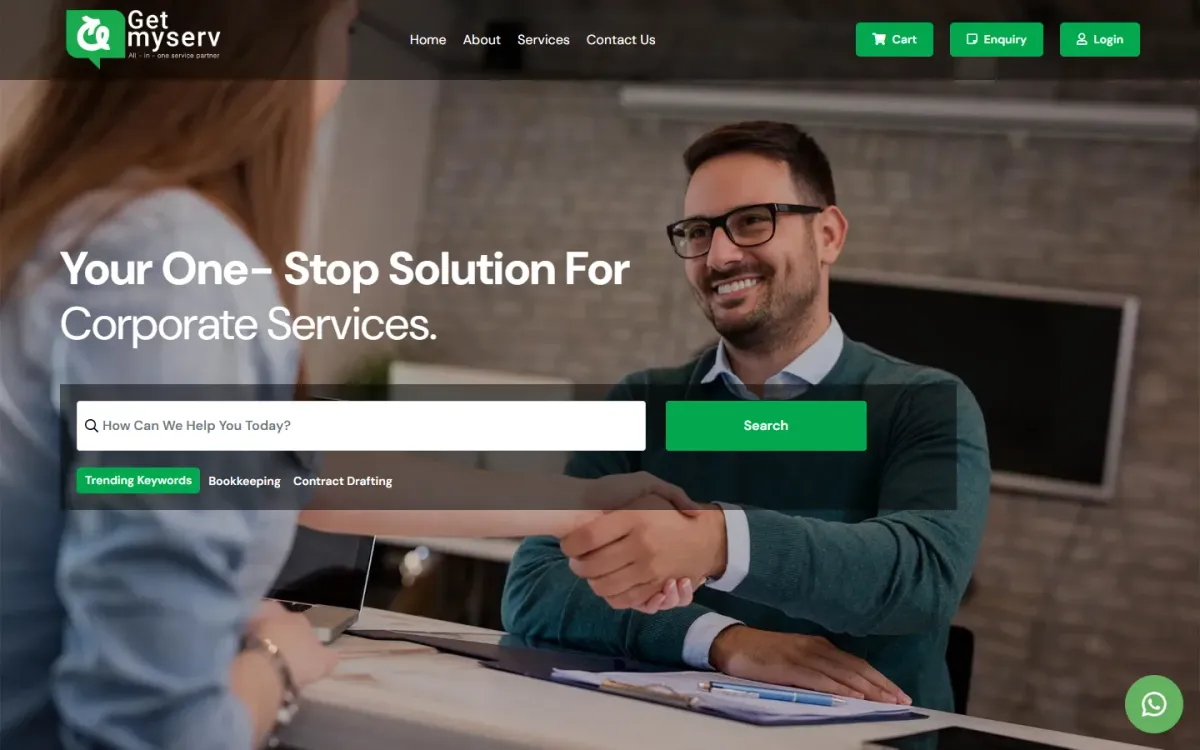
This guide draws on the work we have done for firms that sell expertise: the website for Secured First, insurance and investment advisers in Dubai; the website for Kosher Man, a legal and management consultancy in India; the Get My Serv marketplace for corporate services in the UAE; and an office management system for a growing office in Kerala.
Answer the visitor's question, not yours
Most professional firm websites open with "who we are": the founding year, a mission statement, a list of values. The visitor is asking something else: can these people solve my problem, how do they work, and roughly what will it cost? Every page should answer one of those three questions.
1. Show the advice working
Every insurance website lists the same cover types, and every consultancy lists the same services. Listing them proves nothing. What sets a firm apart is how it thinks, and the clearest way to show that is a short story.
The Secured First site has four advice stories, with titles like "The cheapest plan was not the cheapest plan" and "Talked out of cover they did not need". Each one shows the advice making a difference, which a product grid can't do.
A good advice story has four parts:
- The situation, in the client's words. Leave out names unless the client has agreed in writing.
- What you noticed that the client hadn't.
- What you advised, including when that meant not selling anything.
- What happened next.
Keep each story to a few hundred words. Three or four good ones do more than a page of testimonials.
2. Put the people first
People hire a professional, not a logo. A visitor wants to know who they will actually talk to. On the Kosher Man site, the about section is built around the founder's experience in supply chain and law, because that experience is what clients are paying for.
Use real photos of the people, their qualifications, the areas they work in and the languages they speak. Only claim experience you can back up.
3. One plain page for each practice area
A single "Services" page with ten bullet points can't rank for any of them, and it doesn't answer anyone's actual question. Give each area its own page: contracts, trade, intellectual property and corporate law for a legal consultancy, or health, home, business and vehicle cover for insurance advisers, the way Secured First does.
Each page can follow the same simple pattern:
- Who this is for, in one or two sentences.
- What you do for them, in everyday language.
- What happens after they get in touch, and which documents to have ready.
- Three to five questions people ask about this area, answered briefly.
Write it the way you would explain it across a desk. If a term needs a definition, explain it or leave it out.
4. Publish prices where you can
Most firms keep prices behind a phone call. That makes comparing slow and puts off people who only want a rough idea first. Where a service has a fixed scope, list it as a package with what it includes and what it costs.
Get My Serv does exactly that. Each package lists its inclusions and price, such as a business launch in the UAE from AED 4,888 including the licence, MOA and bank letter. Buyers who have decided can add it to a cart, and those who haven't can send an enquiry or ask for help.
Where the price really depends on the case, say what it depends on and give a starting point if you can. "It depends" on its own reads like "expensive".
5. Make it easy to get in touch
Put a clear action on every page, such as "Talk to an Adviser" on the Secured First site, with a phone number, email and office address within reach. Keep the form short: name, how to reach you and one question. If you usually reply within a working day, say so on the site.
6. Help search engines understand the firm
Structured data tells Google what kind of business you are. Schema.org has specific types for professional firms, including FinancialService, LegalService, AccountingService and ProfessionalService. The Secured First site uses FinancialService. Add your address, opening hours, services and the areas you serve, and keep them identical to your Google Business Profile.
If you are an advocate in India, check Rule 36 first
Everything above assumes you are free to promote your work. Advocates in India are not. Rule 36 of the Bar Council of India Rules prohibits advocates from advertising or soliciting work. Since a 2008 amendment, advocates may have a website that gives their name, contact details, enrolment details, professional qualifications and areas of practice. Anything beyond what the Bar Council allows can be treated as professional misconduct.
In practice, a website for an advocate should stay factual. Leave out client stories, testimonials, case outcomes, "success rates" and anything that reads like a sales pitch. Firms offering management, trade or compliance consultancy that is not legal practice have more room, but should be clear about which services are which. Check the current rules with your Bar Council, because they are the ones who enforce them.
Other regulated professions have their own rules too, including financial advisers in the UAE and chartered accountants in India. Before you publish stories, returns or prices, ask your regulator or compliance adviser what is allowed.
What to leave off
- Stock photos of handshakes, gavels and glass towers. Visitors recognise them, and they say nothing about you.
- Long mission statements and value lists nobody reads.
- Visitor counters, "clients served" figures or awards you can't back up.
- Jargon that shows off instead of explaining.
- Pop-ups before the visitor has read a single line.
Behind the website: running the office
The website brings work in, and the office has to deliver it. Many growing firms still track attendance, client work and billing in separate registers and spreadsheets. For one office in Kerala we built a single web app for attendance and leave, tasks with owners and due dates, client records, invoices and a shared document store. It isn't the first thing to build, but once a firm has more than a handful of staff, it saves hours every week.
A checklist for your firm's website
- Does the home page say who you help and how, in one sentence?
- Does each practice area have its own page in plain language?
- Can a visitor see who they will actually be dealing with?
- Is there at least one real example of your advice working, if your rules allow it?
- Is there a price, a starting price or an honest explanation of what the price depends on?
- Can someone contact you from any page in one tap?
- Does the site follow your profession's rules on promotion?
You can see these ideas on real sites on our page for consultants, advisers and legal firms. If you would like a site like this for your firm, tell us about it.
See it in practice
See the websites and software we built for advisers, a legal consultancy and a corporate-services marketplace.
Need a hand with this?
Our web development team in Angamaly, Kochi can do it for you.